Frozen Shoulder Treatment
Ultrasound-guided steroid injections and hydrodilatation to ease pain and restore movement.

Medically reviewed by Dr James Thing, MBBS, BSc, MRCGP, FFSEM — Sport and Exercise Medicine Consultant
De Quervain’s tenosynovitis is a painful condition that occurs as a result of inflammation of the tendons that run along the thumb side of the wrist. These tendons, abductor pollicis longus and the extensor pollicis brevis, are responsible for moving the thumb outward and straightening it. When these tendons become inflamed as a result of overuse/load, they swell and rub against the tight sheath that surrounds them, causing pain, swelling, redness and discomfort.

De Quervain’s tenosynovitis is most common in adults between the ages of 30 and 50 and is particularly common in mothers of young babies. It is also more common in people who engage in activities that require repetitive thumb movements, such as:
Digging, weeding, and using gardening tools can strain the thumb tendons.
Frequent typing can put repetitive stress on the thumb tendons.
Racket sports like tennis or racquetball can involve repetitive thumb movements that trigger inflammation.
Repeatedly grasping tools or performing forceful hand movements can strain the thumb tendons.
Lifting, carrying and feeding young children can result in overloading of the thumb tendons resulting in pain and inflammation.
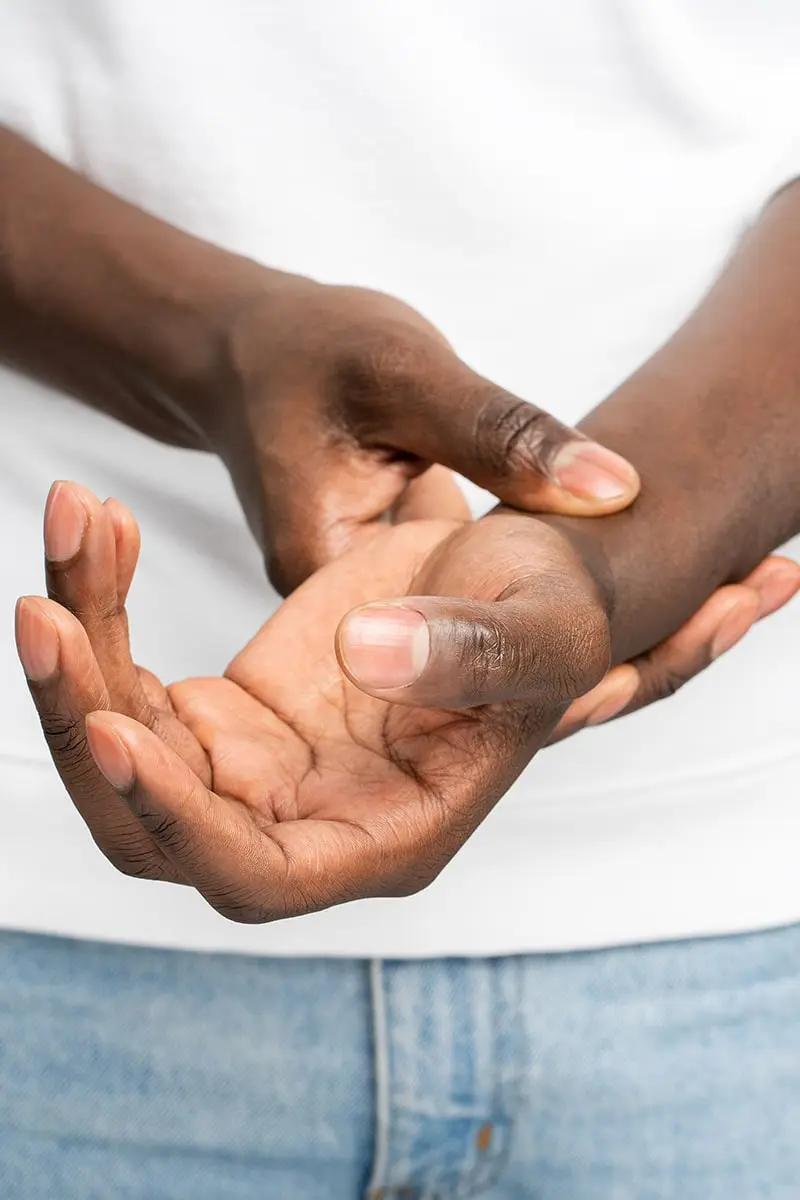

The primary symptom of de Quervain’s tenosynovitis is pain at the base of the thumb and into the wrist. This pain may intensify with activities that involve thumb movement, such as:
Grasping objects such as a key
Making a fist
Turning the wrist
Lifting objects with the arms in front of you and thumbs pointing upwards (e.g., lifting a child or pouring a kettle)
Other symptoms of de Quervain’s tenosynovitis may include:
Swelling at the base of the thumb
Tenderness to the touch
A "catching" or "snapping" sensation when moving the thumb
Diagnosis of de Quervain’s tenosynovitis typically involves a physical examination and a review of medical history. The doctor will ask about the patient's symptoms, activities, and any history of previous injuries or conditions affecting the wrist or hand.
During the physical examination, the doctor will palpate (feel) the area around the base of the thumb for tenderness, swelling, and crepitus (a crackling or grinding sensation) when moving the thumb. They may also perform specific tests to assess range of motion, grip strength, and sensation in the thumb and fingers. The patient may be asked to hold the thumb up against resistance which can trigger pain. Finkelstein’s test involves asking the patient to place their thumb into their palm and wrapping their fingers around the thumb and then dropping the wrist downwards, stretching the tendons at the base of the thumb. Pain in this position signals a positive test and increases the probability of de Quervain’s tenosynovitis.
Imaging tests, such as ultrasound can be used to demonstrate thickening of the tendons within the sheath (which itself can also appear thickened). Fluid can be seen in the tendon sheath and the doctor may assess excessive blood flow in the sheath using doppler ultrasound which is often seen in de Quervain’s tenosynovitis.

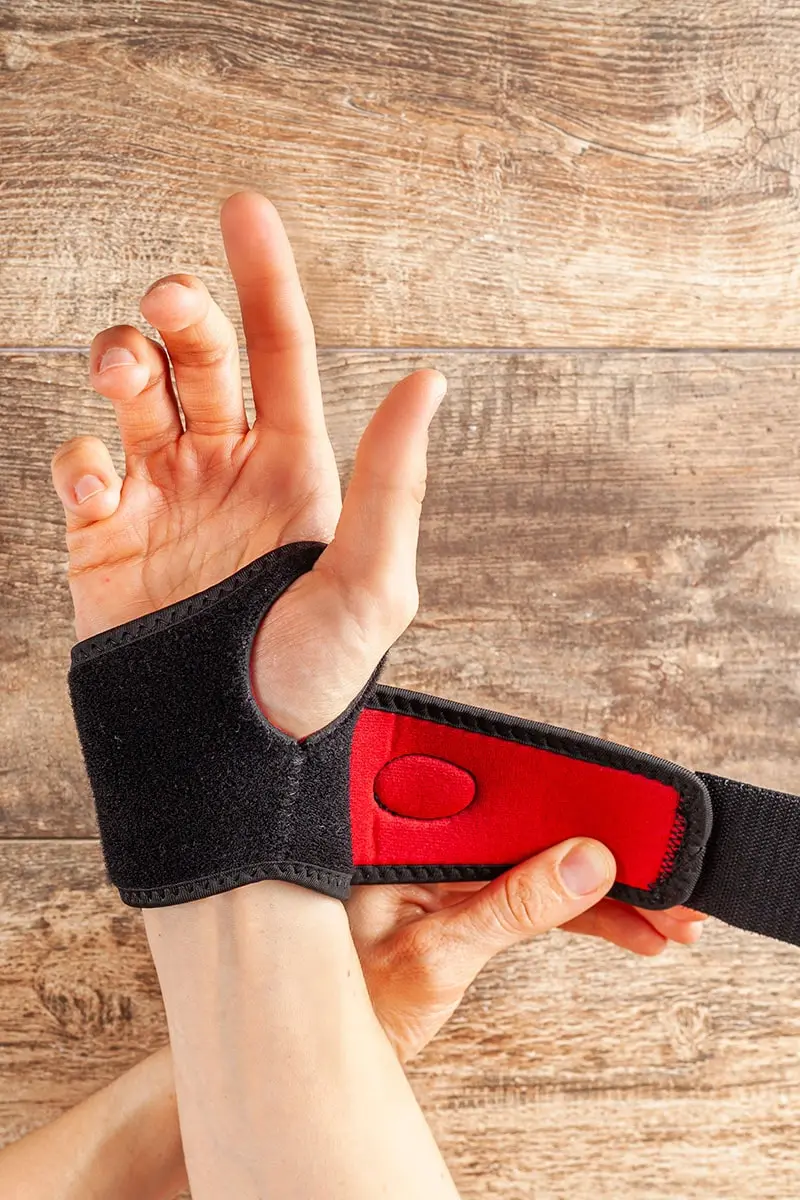
Treatment for de Quervain tenosynovitis typically focuses on reducing inflammation and pain, and restoring range of motion in the thumb. Non-surgical treatments are often effective and may include:
At Joint Care London, these injections are performed after a thorough consent process, whereby the risk and benefits of the procedure are discussed in detail with your doctor. The experienced medical doctor will then place you in a seated position. The thumb side of the wrist and base of the thumb is cleaned using a cleaning solution to ensure that the procedure is performed under sterile conditions. The tendon sheath injection is performed with a small dose of steroid and local anaesthetic.
The injection itself is normally completed within 30-60 seconds, after which a plaster is applied and post-injection advice is given. The patient is advised to look out for any signs of infection, specifically to check whether the local area becomes red, hot, tender, swollen or if they develop a fever. If this occurs then the patient is asked to contact the clinic immediately at which time a formal reassessment will occur and if needed oral antibiotics can be prescribed. The patient is also warned that following any injection they may notice a short-term worsening or flare in their symptoms after the local anaesthetic has worn off (4-5 hours). This may last for 3-5 days and the patient is advised to consider icing of the area using an ice pack for 10-15 minutes every hour as required.
If non-surgical treatments fail to provide adequate relief, surgery may be considered. Surgical intervention for de Quervain tenosynovitis involves releasing the tight tendon sheath, allowing the tendons to move freely and reducing pressure on them. This procedure is typically performed minimally invasively under local anesthesia.
Additional tips for managing de Quervain tenosynovitis pain:
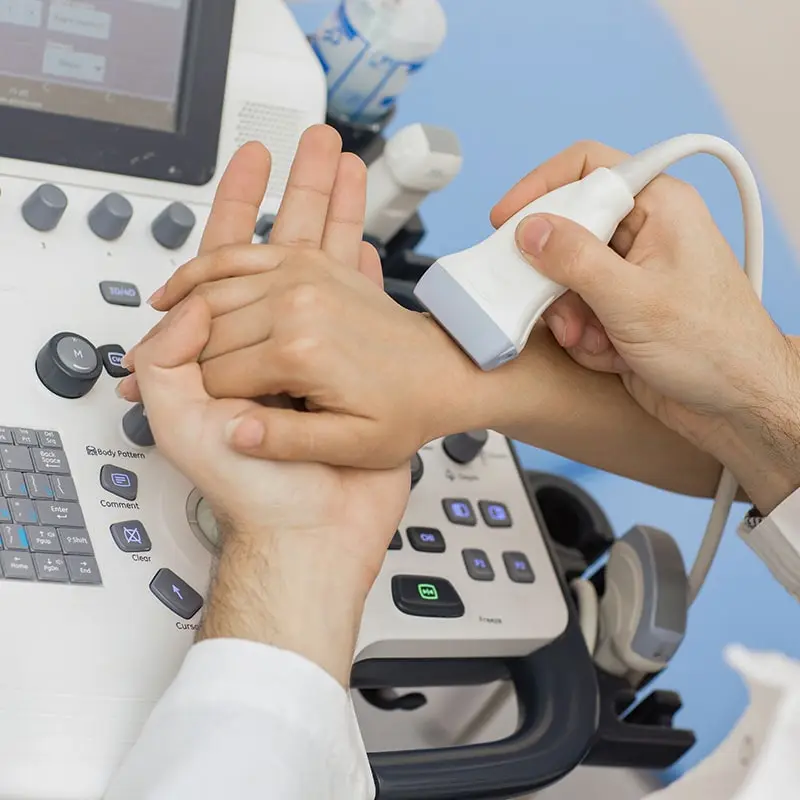
At Joint Care London all injections for de Quervain’s tenosynovitis are performed under ultrasound guidance. The affected tendon compartment at the wrist is small and lies close to the radial nerve and artery, so ultrasound guidance ensures the injection is delivered precisely into the tendon sheath — improving effectiveness and safety compared with unguided (landmark) injection.
An ultrasound-guided steroid injection costs £525. An initial consultation including diagnostic ultrasound is £405 — see our full fee guide.
Joint Care London provides this treatment at our clinics in Notting Hill (The Portobello Clinic, 12 Raddington Road, W10) and Golders Green (The Brook Surgery, NW11), with appointments usually available within a week. Call 0333 011 1885 or book a consultation.
Steroid injection is the most effective non-surgical treatment: the majority of patients experience significant or complete relief after a single ultrasound-guided injection. A second injection can be considered if symptoms recur.
Quite possibly. De Quervain’s tenosynovitis is common in new parents due to repeated lifting of the baby with the thumbs extended (it is sometimes called “mummy thumb”). It also occurs more often during and after pregnancy for hormonal reasons.
A single local steroid injection is generally considered compatible with breastfeeding. Please let your consultant know that you are breastfeeding so this can be discussed as part of your treatment plan.