- Apr 13, 2026
- By Joint Care London
Private Joint Pain Treatment London: Your Complete Guide to Going Private for MSK Care
Is Private Joint Pain Treatment Worth It? A Practical Guide for Londoners
If you are living with persistent joint pain, a stiff knee, an aching shoulder, or the daily grind of a musculoskeletal condition, you will already know how much it can affect your life. You may also have discovered that getting the right NHS care quickly is harder than it used to be. This guide is designed to help you understand what private joint pain treatment in London actually involves, what it costs, how to choose the right clinic, and whether it is the right step for you.
The NHS Waiting List Reality
The NHS remains one of the great achievements of British public life, and the clinicians within it are dedicated and highly skilled. But the honest truth is that demand for musculoskeletal services has outpaced capacity. Referral-to-treatment waiting times for orthopaedic and rheumatology services in many London boroughs now stretch to many months, and in some cases well over a year.
For many conditions, time genuinely matters. A frozen shoulder treated with a corticosteroid injection in the early inflammatory phase often responds far better than one left to progress untreated for six months. Knee osteoarthritis managed early, with the right combination of injection therapy and physiotherapy, can preserve function significantly better than a late intervention.
Going private is not about queue-jumping. For many people, it is simply a pragmatic decision to access care within a timeframe that makes a clinical difference.
What Private Musculoskeletal Treatment Actually Involves
At a specialist clinic such as Joint Care London, private musculoskeletal treatment begins with a consultant-led assessment. This is an important distinction from some private pathways where an initial appointment may be with a physiotherapist or junior doctor. Seeing a consultant at your first appointment means the person examining you has the full breadth of clinical training to diagnose accurately and recommend the most appropriate treatment from the outset — without additional referral steps.
That first appointment will usually include a detailed clinical history, a physical examination, and a discussion of your imaging. From there, a personalised treatment plan is agreed with you, which might include injection therapy, guided rehabilitation, or a referral onward if surgical assessment is warranted.
What Conditions Are Treated Privately?
- Knee pain: osteoarthritis, meniscal irritation, patellofemoral syndrome, bursitis
- Shoulder pain: rotator cuff tears or tendinopathy, frozen shoulder, impingement, acromioclavicular joint problems
- Hip pain: osteoarthritis, trochanteric bursitis, hip flexor tendinopathy
- Ankle and foot pain: plantar fasciitis, Achilles tendinopathy, ankle osteoarthritis
- Elbow pain: tennis elbow, golfer's elbow
- Spinal pain: facet joint arthritis, sacroiliac joint dysfunction
- Inflammatory arthritis: rheumatoid arthritis, psoriatic arthritis, gout flares
- Sports injuries: ligament sprains, tendon injuries, overuse conditions
Cost: What to Expect and What Affects the Price
An initial consultation with a specialist consultant in London typically costs between £150 and £300. Injection procedures range from around £200 for a straightforward corticosteroid injection up to £600–£1,000 or more for advanced treatments such as platelet-rich plasma (PRP) or Arthrosamid.
Joint Care London's injection costs average a third to half of what major London hospitals charge for equivalent procedures. That reflects a more efficient, specialist-focused model — not a compromise on clinical quality.
The main injection types available include:
- Corticosteroid (steroid) injections: the most established treatment for inflammatory joint and soft tissue conditions.
- Hyaluronic acid injections: used primarily for knee osteoarthritis to improve lubrication and reduce discomfort.
- PRP injections: a regenerative treatment using concentrated platelets to promote tissue healing.
- Arthrosamid: a non-biodegradable hydrogel injection for knee osteoarthritis providing long-lasting cushioning and pain relief.
Insurance vs Self-Pay: Which Route Is Right for You?
Joint Care London accepts several major insurers, including Bupa, Cigna, Vitality, and WPA. To use your insurance, you will generally need a GP referral letter and a pre-authorisation code from your insurer.
For those without insurance, self-pay joint injections are a straightforward option with complete transparency over costs from the outset. It is worth being aware that some advanced treatments such as PRP or Arthrosamid are not always covered by insurance policies. A self-pay approach for these specific treatments is often the norm even among insured patients.
What to Look for in a Private MSK Clinic
Consultant-led care from the first appointment
In some private settings, your initial appointment may be with a physiotherapist or junior doctor, with a consultant only becoming involved later. Insist on knowing who will actually see you. At Joint Care London, all assessments are conducted by experienced consultants.
Appropriate accreditation and clinical governance
Check that the clinic's consultants are on the GMC Specialist Register in a relevant specialty — typically trauma and orthopaedics, rheumatology, sport and exercise medicine, or pain medicine.
Availability of imaging guidance for injections
If a clinic offers joint injections without image guidance, that is worth scrutinising closely.
Transparent pricing
Any reputable clinic should provide a clear, all-inclusive price for consultations and procedures before you attend.
Timely access
Joint Care London offers appointments within 7 working days, meaning you are not simply trading an NHS waiting list for a long private one.
Why Ultrasound Guidance Matters for Joint Injections
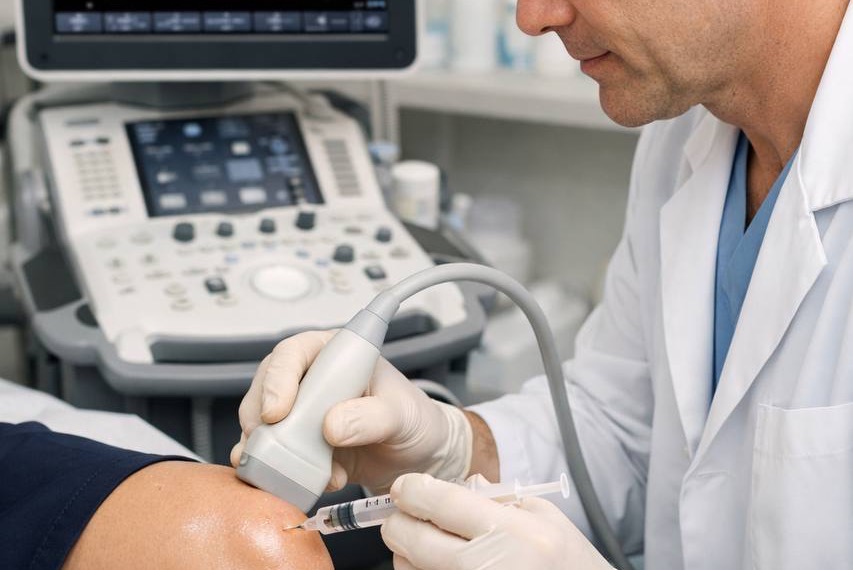
Studies comparing landmark-guided versus ultrasound-guided injections consistently show that ultrasound guidance significantly improves needle placement accuracy, which in turn improves treatment outcomes and reduces the risk of complications.
At Joint Care London, all injections are performed under ultrasound guidance. This is not a premium add-on — it is the standard of care for every patient.
How to Get Started
You do not need a GP referral to self-refer to Joint Care London, though a referral letter is helpful if you are using insurance.
Joint Care London has clinics at Golders Green / Finchley Road, Notting Hill, and Henley-on-Thames. Appointments are available within 7 working days.
To find out more or to book a consultation, contact the team at Joint Care London or call 0333 011 1885. Whether you are dealing with a long-standing condition, a recent injury, or simply want an expert opinion without a lengthy wait, the right help is closer and more accessible than you might think.