- Nov 08, 2025
- By Joint Care London
Rotator Cuff Pain: Causes, Diagnosis and Treatment Options
Shoulder pain is one of the most common musculoskeletal complaints, and the rotator cuff is at the heart of a significant number of cases. Whether you have noticed a dull ache when reaching overhead, sharp pain when sleeping on your side, or a gradual loss of strength in your arm, there is a good chance the rotator cuff is involved. This guide explains what the rotator cuff is, why it becomes painful, how it is diagnosed, and what the full range of treatment options looks like — including when an injection might be the right next step.
What Is the Rotator Cuff?
The rotator cuff is a group of four muscles and their associated tendons that wrap around the shoulder joint, connecting the upper arm bone (humerus) to the shoulder blade (scapula). These four muscles — the supraspinatus, infraspinatus, teres minor, and subscapularis — work together to stabilise the shoulder, keep the ball of the joint centred in the socket, and power a wide range of arm movements including lifting, rotating, and reaching.
Because the shoulder is the most mobile joint in the human body, the rotator cuff is placed under considerable repeated stress. This makes it particularly vulnerable to both acute injury and gradual wear over time.
Common Causes of Rotator Cuff Pain
Tendinopathy (Including Supraspinatus Tendinopathy)
Tendinopathy refers to a degenerative change within the tendon tissue itself, often resulting from overuse or repetitive loading. Supraspinatus tendinopathy — affecting the tendon that runs along the top of the shoulder — is the most common form of rotator cuff tendinopathy. It produces pain with overhead activities and is particularly prevalent in people whose work or sport involves repeated arm elevation.
Shoulder Impingement Syndrome
Shoulder impingement occurs when the tendons of the rotator cuff become compressed beneath the bony arch at the top of the shoulder during arm movement. This narrowing of space creates friction, pain, and over time can contribute to tendon damage.
Rotator Cuff Tears
A rotator cuff tear may be partial or full-thickness. Tears can occur suddenly — for example, from a fall onto an outstretched arm — or develop gradually through progressive degeneration. Not all tears cause severe pain; some people have significant tears with surprisingly modest symptoms.
Bursitis
A fluid-filled sac called the subacromial bursa sits between the rotator cuff tendons and the overlying bony arch. When this bursa becomes inflamed (subacromial bursitis), it can generate significant shoulder pain, particularly with overhead movement.
Other Contributing Factors
- Age-related degeneration — rotator cuff changes become more common from the fifth decade onwards
- Repetitive overhead occupational or sporting activities (e.g. swimming, tennis, painting)
- Poor posture and scapular control
- Previous shoulder injury or instability
- Reduced flexibility and muscle imbalance around the shoulder girdle
Recognising the Symptoms
- Pain on the outer side or front of the shoulder, sometimes radiating into the upper arm
- Pain with lifting the arm, especially between roughly 60 and 120 degrees of elevation (a "painful arc")
- Difficulty reaching behind the back — for example, doing up a bra strap or tucking in a shirt
- Night pain, particularly when lying on the affected shoulder
- Weakness in the arm, especially when lifting or rotating
- A sense of clicking or catching with certain movements
How Is Rotator Cuff Pain Diagnosed?
Clinical Examination
A careful physical examination remains the cornerstone of rotator cuff diagnosis. A specialist will assess range of motion, strength testing, and use a series of specific clinical tests to identify which structures are likely involved.
Imaging
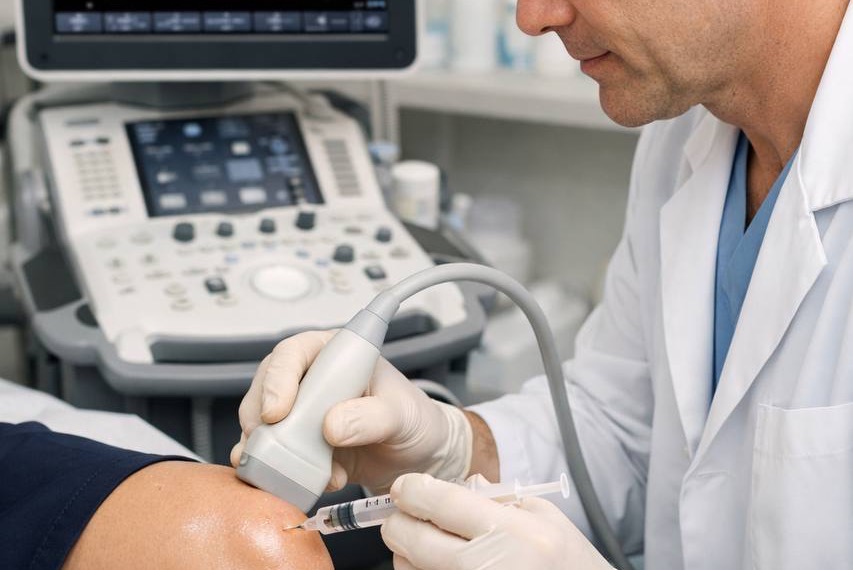
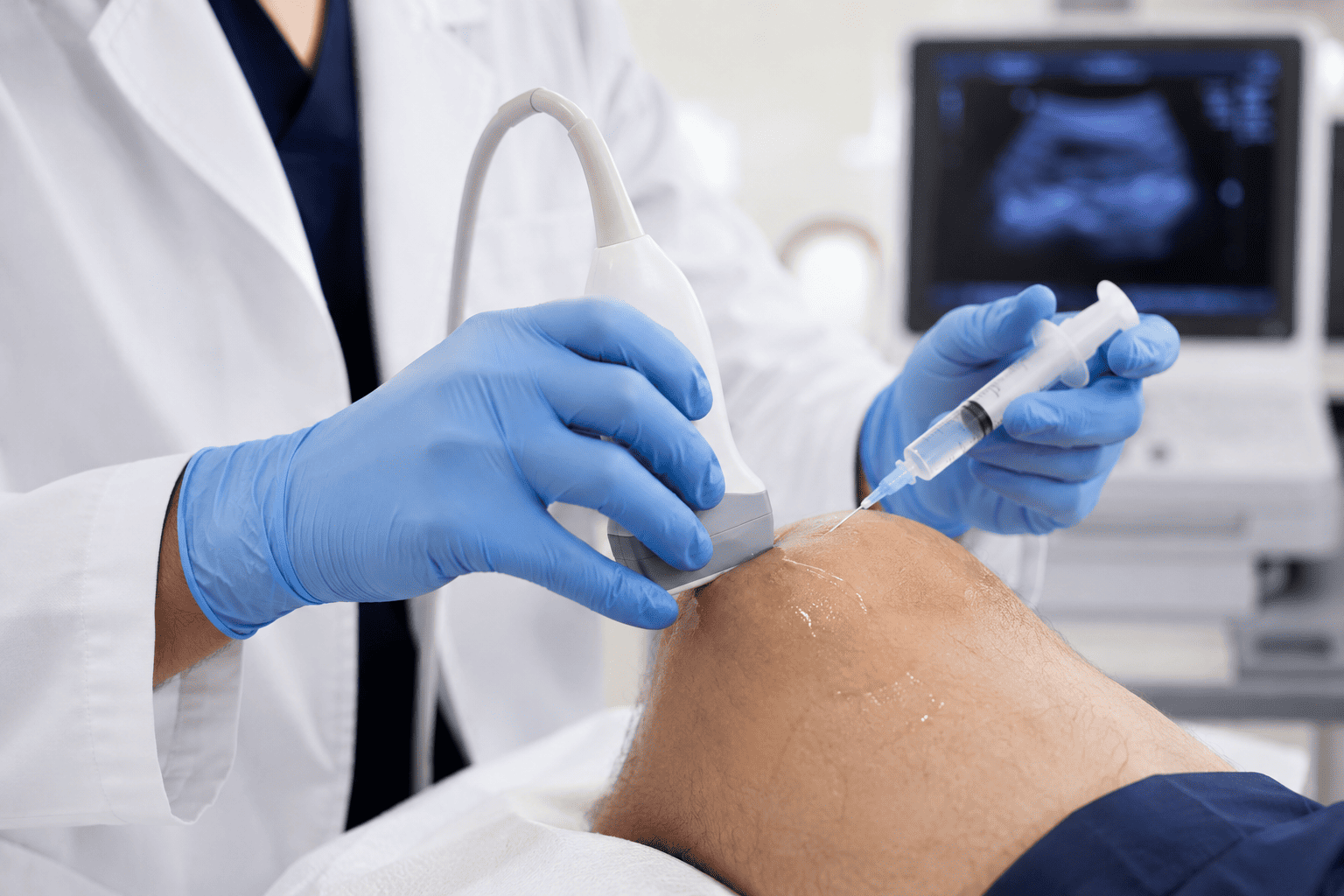
Ultrasound is widely used in musculoskeletal shoulder assessment. It is radiation-free, dynamic, and highly effective at identifying tendinopathy, partial and full-thickness tears, bursal thickening, and calcific deposits. It can also be used in real time to guide injections with precision.
MRI provides detailed cross-sectional images of all shoulder structures and is particularly valuable when a full-thickness tear or labral pathology is suspected, or when surgical planning is being considered.
The Treatment Ladder: From Conservative Care to Surgery
The good news for most patients with rotator cuff pain is that the majority of cases can be managed effectively without surgery. You can find a full overview of our approach on our shoulder treatments page.
Step One: Physiotherapy and Rehabilitation
Structured physiotherapy is the foundation of rotator cuff injury treatment. A well-designed programme will address muscle imbalances, improve scapular stability, restore range of motion, and progressively load the tendon to encourage healthy tissue remodelling. Patients are encouraged to persist with physiotherapy for eight to twelve weeks before concluding it has been ineffective.
Step Two: Injections for Shoulder Pain Relief
When physiotherapy alone has not produced sufficient improvement, or when pain is severe enough to prevent meaningful engagement with rehabilitation, an injection may provide the relief needed to progress. For patients seeking shoulder pain relief in London, Joint Care London offers a range of ultrasound-guided injection options. More detail is available on our rotator cuff pain conditions page.
Step Three: Surgery
Surgical intervention is considered when conservative measures have failed to deliver adequate improvement, or when there is a complete tendon tear unlikely to respond to non-surgical management. The most common procedures include subacromial decompression and rotator cuff repair.
Injection Options for Rotator Cuff Pain
Steroid (Corticosteroid) Injections
A corticosteroid shoulder injection delivers a powerful anti-inflammatory agent directly into the affected area — most commonly the subacromial bursa. It is particularly effective for acute bursitis, impingement, and reactive tendinopathy, providing significant and relatively rapid relief. Learn more about steroid injections at Joint Care London.
Platelet-Rich Plasma (PRP) Injections
PRP injections use a concentration of the patient's own blood platelets, injected directly into the damaged tendon under ultrasound guidance to stimulate the body's natural healing response. This makes it particularly appealing for tendinopathy and partial tears where genuine tissue regeneration is the goal. Find out more about PRP injections for the shoulder.
Hyaluronic Acid Injections
Hyaluronic acid injections can be a useful option for patients who are not appropriate candidates for steroid injections. They provide lubrication and joint environment optimisation that may help reduce friction and improve comfort. Explore our hyaluronic acid injection service to learn more.
What to Expect From a Shoulder Injection at Joint Care London
All injections at Joint Care London are performed under real-time ultrasound guidance, ensuring precise placement and reducing the risk of misinjection. The procedure typically takes around fifteen to twenty minutes in total. A small number of patients experience a temporary post-injection flare — a brief increase in pain lasting one to three days — before the benefit becomes apparent. This is a normal response and should not be interpreted as treatment failure.
Realistic Outcomes
Most patients with rotator cuff pain who engage fully with a structured treatment approach — combining physiotherapy, activity modification, and where indicated an injection — achieve meaningful and lasting improvement. Outcomes are influenced by duration and severity of symptoms, degree of structural change on imaging, age and general health, and engagement with rehabilitation.
When Should You Seek Assessment?
If shoulder pain has persisted for more than four to six weeks, is interfering with sleep or daily activities, or is limiting your ability to work or exercise, it is worth seeking a specialist opinion. At Joint Care London, we offer expert musculoskeletal shoulder treatment in a clinical setting focused on evidence-based care and patient outcomes.